

How Long Does Perimenopause Actually Last?
The duration of perimenopause is highly unpredictable, making professional medical guidance essential for managing the years of hormonal flux. In Lawrenceville, Georgia, board-certified OB/GYN Dr. Marc Jean-Gilles, DO, FACOG, helps women understand their unique biological timelines at Abundant Life Healthcare. For more information, contact us today or book an appointment online. We are conveniently located at 601A Professional Drive, Suite 370, Lawrenceville, GA 30046.
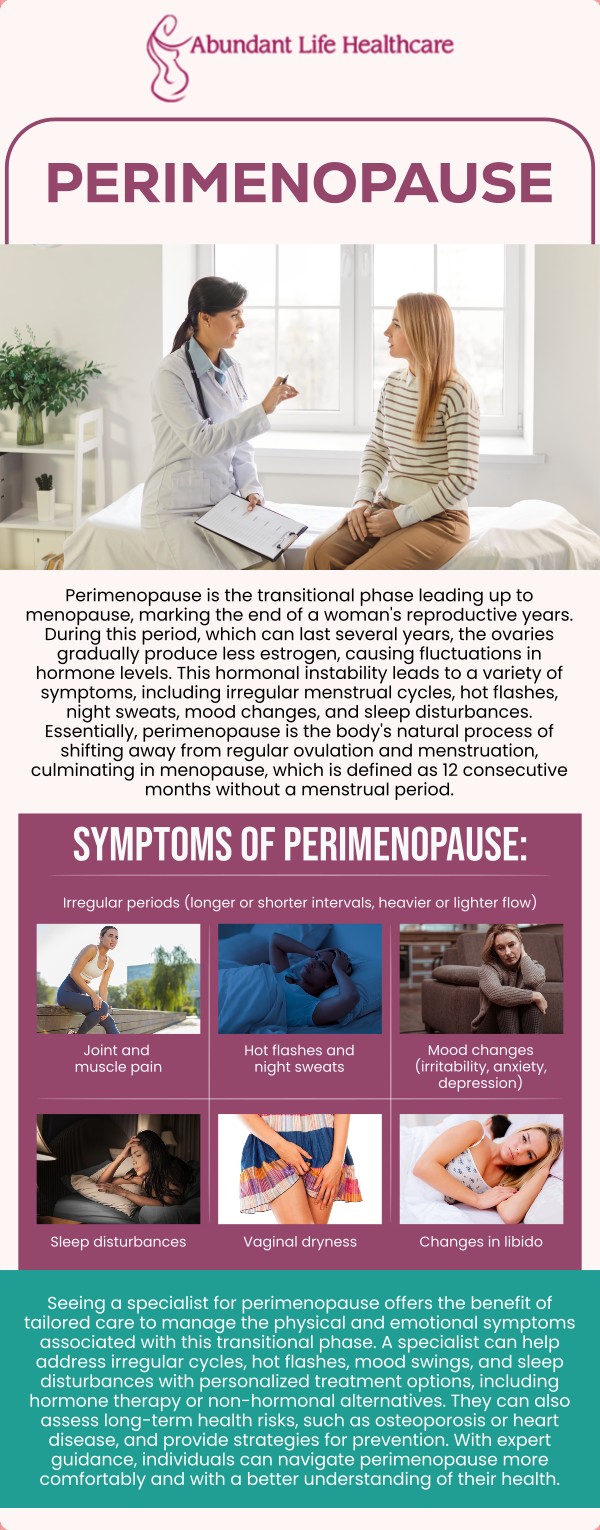
Table of Contents:
What is the typical duration of perimenopause for most women?
Can perimenopause last longer than average, and why?
Are there factors that influence how long perimenopause lasts?
How can women track the length of their perimenopause phase?
Navigating the Perimenopause Transition with Dr. Marc Jean-Gilles
Perimenopause is a natural, transitional phase leading up to menopause, characterized by hormonal fluctuations and a variety of physical and emotional changes. For most women, perimenopause lasts between four and eight years, though it can be shorter or longer depending on individual factors. This transition often begins in a woman’s 40s but may start earlier or later.
Common signs of perimenopause include changes in menstrual cycles—such as irregular or skipped periods—as well as symptoms like hot flashes, night sweats, sleep disturbances, and mood changes. The duration and intensity of these symptoms can differ from woman to woman, influenced by genetics, general health, and lifestyle choices.
At Abundant Life Healthcare, we understand that perimenopause can be a challenging and confusing time. Our team is dedicated to supporting you through this transition with compassionate care and personalized management options. If you are experiencing bothersome or disruptive symptoms, our providers can help you explore effective strategies—ranging from lifestyle adjustments to medical treatments—that promote your overall well-being.
Perimenopause—the transitional phase leading up to menopause—can be a unique and sometimes challenging time in a woman’s life. While this stage typically lasts four to eight years, some women may notice symptoms for as little as a few months, while others may experience changes for up to a decade or longer.
At Abundant Life Healthcare, we recognize that every woman’s journey through perimenopause is different. Factors such as genetics, lifestyle choices (like smoking), and certain medical conditions can all influence the onset and duration of perimenopausal symptoms. For example, if your mother or sisters experienced a longer perimenopausal period, you might be more likely to follow a similar pattern. Likewise, underlying health issues or treatments that affect the ovaries may play a role in your experience.
The main reason for these differences is the fluctuation of estrogen and other reproductive hormones. These changes do not happen in a predictable way—hormone levels can rise and fall irregularly, leading to symptoms like irregular periods, hot flashes, sleep disturbances, and mood swings.
If you are noticing changes and wondering whether they might be related to perimenopause, or if you are struggling with ongoing symptoms, the compassionate providers at Abundant Life Healthcare are here to help. Our team can assess your individual situation to determine whether your symptoms are part of the natural perimenopausal transition or if another condition may be involved.
At Abundant Life Healthcare, we recognize that every woman’s journey through perimenopause is unique. Perimenopause is the transitional phase leading up to menopause, marked by fluctuations in hormone levels and changes in menstrual cycles. For most women, perimenopause lasts between four and eight years, but the experience—and its duration—can vary widely.
Several factors can affect how long perimenopause lasts for each individual. Some of the most important influences include:
• Age at Onset: Women who begin to experience perimenopausal symptoms at a younger age may undergo a longer transition. Those who enter perimenopause later in life may have a shorter duration.
• Genetics: Family history can play a significant role. If your mother experienced a longer or shorter perimenopausal phase, you may have a similar experience.
• Lifestyle Choices: Smoking, body weight, and overall health can impact the timing and length of perimenopause. For example, smoking is often associated with an earlier onset.
• Medical History: Certain conditions—such as autoimmune disorders—or previous treatments like chemotherapy or radiation can influence perimenopausal timing and duration.
• Ethnicity and Cultural Background: Research indicates that ethnicity may affect the age of onset and duration of perimenopause, as well as the severity of symptoms.
• Hormonal and Reproductive History: The age at which menstruation began and the number of pregnancies can also play subtle roles in shaping the perimenopausal experience.
While it isn’t possible to predict exactly how long perimenopause will last for each woman, understanding these factors can empower you and your healthcare provider to better anticipate and manage this natural stage of life. At Abundant Life Healthcare, our team is dedicated to supporting you through every step of this transition, offering evidence-based guidance, compassionate care, and a holistic approach to your well-being.
At Abundant Life Healthcare, we understand that every woman’s experience with perimenopause is unique. If you’re beginning to notice changes in your menstrual cycle or new symptoms, tracking your perimenopause journey can empower you to better understand your body—and allow our team to provide the most personalized care possible.
Perimenopause is the transitional phase leading up to menopause, typically beginning in your 40s, though it can start earlier. This stage can last anywhere from a few months to several years. Menopause itself is defined as going twelve consecutive months without a menstrual period.
How to Track Perimenopause
We encourage our patients to monitor changes in their menstrual cycles and symptoms. You can do this by:
• Keeping a Menstrual Diary or Using a Period-Tracking App: Note the frequency, duration, and flow of your periods. This can help you—and your Abundant Life Healthcare provider—recognize irregularities such as missed periods, changes in cycle length, or variations in bleeding.
• Recording Symptoms: Symptoms like hot flashes, night sweats, mood changes, sleep disturbances, and vaginal dryness are common during perimenopause. A symptom journal helps you track when these changes begin and how often they occur.
Why Tracking Matters
Documenting your cycle and symptoms gives you valuable information to share with your Abundant Life Healthcare provider. This can help estimate how long you’ve been in perimenopause and support decisions about care and symptom management.
If you’re uncertain about where you are in your menopausal transition, regular check-ins with our compassionate healthcare team can offer clarity. While hormone testing can sometimes help, fluctuating hormone levels during perimenopause mean these tests aren’t always definitive. Our providers combine your tracking data, medical history, and current symptoms to guide you through this natural life stage.
The unpredictable timeline of hormonal change can feel overwhelming, but you do not have to handle it alone. At Abundant Life Healthcare in Lawrenceville, Georgia, Dr. Marc Jean-Gilles, DO, FACOG, partners with women to bring clarity and physical comfort back to their daily lives. Understanding that this transitional phase impacts everyone differently, Dr. Jean-Gilles crafts personalized treatment plans targeting individual symptoms. The practice specializes in advanced, restorative options like Biote bioidentical hormone pellets, customized peptide therapies, and traditional hormone replacement protocols. With dedicated medical guidance, you can effectively smooth out the hormonal highs and lows of this biological shift.
At Abundant Life Healthcare, we’re committed to supporting you every step of the way, so you can approach perimenopause and menopause with confidence and peace of mind. For more information, contact us today or book an appointment online. We are conveniently located at 601A Professional Drive, Suite 370, Lawrenceville, GA 30046. We serve patients from Lawrenceville GA, Suwanee GA, Snellville GA, Duluth GA, Dacula GA, Lilburn GA, Loganville GA, Auburn GA, and surrounding cities.
Check Out Our 5 Star Reviews


Additional Services You May Like

Additional Services You May Like
- Obstetrics
- Pregnancy
- Gynecologist
- Birth Control
- Labiaplasty
- Microblading
- Weight Loss
- Semaglutide GLP-1
- Pap Smears
- Pelvic Pain
- Laser Hair Removal
- In House Ultrasound (Including 3D)
- Vaginal Birth After C-Section (VBAC)
- High Risk Pregnancy
- Multiple Gestations
- Postpartum Counseling
- 24hour/365days On Call Service
- Annual Exam
- Abnormal Uterine Bleeding
- Management Of Endometriosis
- Ultrasound
- Pelvic Organ Prolapse
- Urinary Incontinence
- Perimenopause And Menopause
- Sexual Dysfunction
- Cool Sculpting
- Body Contouring
- Ozempic
- Civil Surgeon
- Hormone Replacement Therapy
- Immigration Medicine
- Biote Hormone Pellets
- GLP-1
- Peptide Therapy
- Menopause
- Foundayo


 Send Text
 How May I Help You?