

Missed Period? Common Reasons for a Delay When Not Pregnant
If you are not pregnant, a delay in your period can be caused by various factors, ranging from high stress levels and significant weight fluctuations to underlying hormonal imbalances like Polycystic Ovary Syndrome (PCOS). While a few days of variation is common, a delay exceeding 90 days (amenorrhea) typically warrants a medical evaluation to rule out thyroid issues or early menopause. By thoroughly evaluating your health and creating a tailored plan, Dr. Jean-Gilles, DO, FACOG, helps restore balance and support your menstrual health. For more information, contact us today or book an appointment online. We are conveniently located at 601A Professional Drive, Suite 370, Lawrenceville, GA 30046.
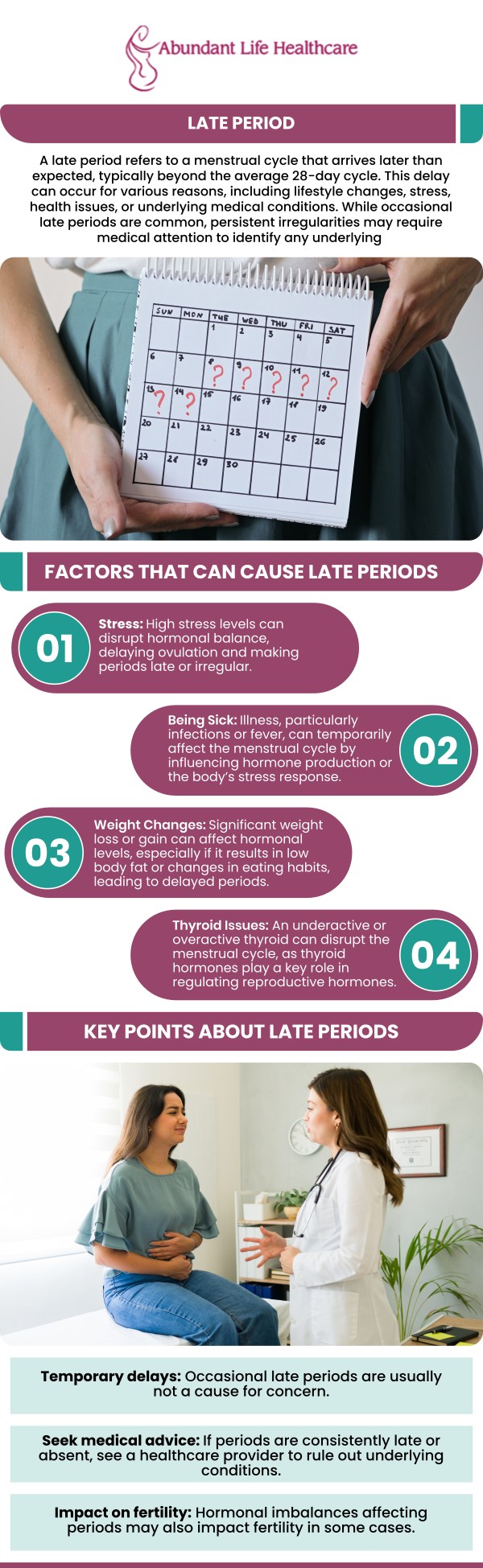
Table of Contents:
What is the maximum delay I can expect in my period if I am not pregnant?
What are the common causes of a delayed period if pregnancy is not a factor?
Can certain medications or birth control methods cause my period to be late?
Are there medical conditions, like PCOS, that can cause significant delays in periods?
Causes of Late Periods When Not Pregnant: Comprehensive Care and Treatment at Abundant Life Healthcare
A typical menstrual cycle ranges from 21 to 35 days, and it’s not unusual for your period to be up to a week late due to factors like stress, illness, significant changes in exercise or weight, or normal hormonal fluctuations.
If you find your period is delayed by more than 7 days and you are certain you are not pregnant, we encourage you to pay attention to any additional symptoms. Conditions such as polycystic ovary syndrome (PCOS), thyroid disorders, or other hormonal imbalances can sometimes cause irregular cycles. While occasional irregularity is usually nothing to worry about, frequent or prolonged delays may indicate an underlying medical issue.
At Abundant Life Healthcare, our compassionate team is here to help you achieve optimal health and peace of mind.
At Abundant Life Healthcare, we understand that a delayed period can be concerning, especially when pregnancy has been ruled out. Our compassionate team sees many patients who experience changes in their menstrual cycles, and we know there are several common reasons why this can happen.
Stress, whether physical or emotional, can disrupt the hormonal balance that regulates your menstrual cycle. Life changes, job pressures, or personal challenges can all play a role. Significant changes in weight, such as rapid loss or gain, may also affect hormone levels, and intense exercise or inadequate nutrition can further impact your cycle.
Hormonal imbalances are another frequent cause. Conditions such as polycystic ovary syndrome (PCOS), thyroid disorders, or elevated prolactin levels may interfere with regular periods. Chronic illnesses or sudden medical conditions can temporarily disturb your body’s normal functioning, leading to delays in menstruation.
Certain medications are also known to affect the menstrual cycle. Even lifestyle changes, like traveling across time zones or working night shifts, can disturb your body’s natural rhythms and lead to irregularities.
For women in their 40s or 50s, approaching menopause (perimenopause) is often accompanied by hormone fluctuations that can cause irregular or delayed cycles. Less commonly, reproductive health conditions such as uterine fibroids or endometriosis may also be involved.
At Abundant Life Healthcare, we encourage you to reach out if your periods are consistently delayed or irregular and pregnancy is not a factor. Our skilled providers offer thorough evaluations, personalized care, and support to help address any underlying issues and restore balance to your health.
If you’re experiencing a late or missed period, it’s important to know that certain medications and birth control methods can play a role.
How Birth Control Impacts Your Cycle: Many hormonal birth control options, like the pill, patch, shot (Depo-Provera), hormonal IUDs, or implants, are designed to regulate or sometimes suppress ovulation. Because of this, it’s common to notice lighter periods, irregular cycles, or even missed periods while using these methods. These changes are generally expected and not usually a cause for worry.
Other Medications Matter Too: Some non-contraceptive medications can also influence your menstrual cycle. For example, certain antidepressants, antipsychotics, thyroid medications, chemotherapy drugs, and others that affect your hormones may disrupt your period’s regularity. Even some over-the-counter medications, especially when taken in large amounts, can have an impact.
When to Reach Out: If you’ve recently started a new medication or switched your birth control and have noticed changes in your cycle, know that this is often a normal adjustment. However, if your period is consistently late or missed, or if you’re experiencing other symptoms like severe pain or heavy bleeding, it’s important to consult with a healthcare provider.
There are several medical conditions that may cause significant delays in your period, and our experienced team is here to help you identify the cause and provide appropriate care. One of the most common causes of irregular or missed periods is Polycystic Ovary Syndrome (PCOS). PCOS is a hormonal disorder that affects people with ovaries during their reproductive years and often leads to disruptions in normal ovulation. This can result in irregular, infrequent, or missed periods. At Abundant Life Healthcare, we are experienced in diagnosing and managing PCOS to help you restore hormonal balance and support your overall well-being.
Other medical conditions we routinely evaluate include thyroid disorders. Both hypothyroidism (underactive thyroid) and hyperthyroidism (overactive thyroid) can affect menstrual regularity, as thyroid hormones play a crucial role in regulating your cycle. Elevated prolactin levels (hyperprolactinemia) may also disrupt your periods by interfering with the hormones necessary for ovulation.
Significant weight changes, whether due to weight loss or gain, can also impact your menstrual cycle. Low body weight, often the result of intensive exercise or eating disorders, may reduce the production of hormones required for ovulation, while obesity can also alter hormone levels and lead to irregular periods. Our team at Abundant Life Healthcare offers compassionate support and comprehensive care for these and other lifestyle-related health concerns.
Additional causes of delayed periods include premature ovarian insufficiency (when the ovaries stop functioning before age 40), chronic illnesses, or high levels of stress. All of these can affect your body’s hormonal balance and menstrual cycle.
At Abundant Life Healthcare, we know how worrying it can be when your period is late, especially when pregnancy isn’t the cause. Dr. Jean-Gilles, DO, FACOG, takes a personalized approach to identify the root cause of your late period. There are many factors that can contribute to delayed menstruation, including hormonal imbalances, stress, thyroid issues, or even changes in weight. Dr. Jean-Gilles will listen to your concerns, review your medical history, and perform necessary tests to accurately diagnose the cause. With tailored treatment options, such as hormonal therapy, lifestyle adjustments, and close monitoring, we are here to help you restore balance and achieve better menstrual health. Your well-being is our priority, and we’re here to support you every step of the way. For more information, contact us today or book an appointment online. We are conveniently located at 601A Professional Drive, Suite 370, Lawrenceville, GA 30046. We serve patients from Lawrenceville GA, Suwanee GA, Snellville GA, Duluth GA, Dacula GA, Lilburn GA, Loganville GA, Auburn GA, and surrounding areas.
Check Out Our 5 Star Reviews


Additional Services You May Like

Additional Services You May Like
- Obstetrics
- Pregnancy
- Gynecologist
- Birth Control
- Labiaplasty
- Microblading
- Weight Loss
- Semaglutide GLP-1
- Pap Smears
- Pelvic Pain
- Laser Hair Removal
- In House Ultrasound (Including 3D)
- Vaginal Birth After C-Section (VBAC)
- High Risk Pregnancy
- Multiple Gestations
- Postpartum Counseling
- 24hour/365days On Call Service
- Annual Exam
- Abnormal Uterine Bleeding
- Management Of Endometriosis
- Ultrasound
- Pelvic Organ Prolapse
- Urinary Incontinence
- Perimenopause And Menopause
- Sexual Dysfunction
- Cool Sculpting
- Body Contouring
- Ozempic
- Civil Surgeon
- Hormone Replacement Therapy
- Immigration Medicine
- Biote Hormone Pellets
- GLP-1
- Peptide Therapy
- Menopause
- Foundayo


 Send Text
 How May I Help You?