

How Is Lower Abdominal Pain in Females Linked to Menstrual Health?
Lower abdominal pain in females is closely related to menstrual health. This pain often stems from the natural release of prostaglandins, which cause uterine contractions to shed the uterine lining. This condition is commonly referred to as primary dysmenorrhea. Dr. Marc Jean-Gilles, DO, FACOG, at Abundant Life Healthcare, explains that mild cramping is common, but persistent or severe pain could signal underlying conditions such as endometriosis, uterine fibroids, or adenomyosis, all of which require thorough diagnostic evaluation and specialized care. For more information, contact us today or book an appointment online. We are conveniently located at 601A Professional Drive, Suite 370, Lawrenceville, GA 30046.
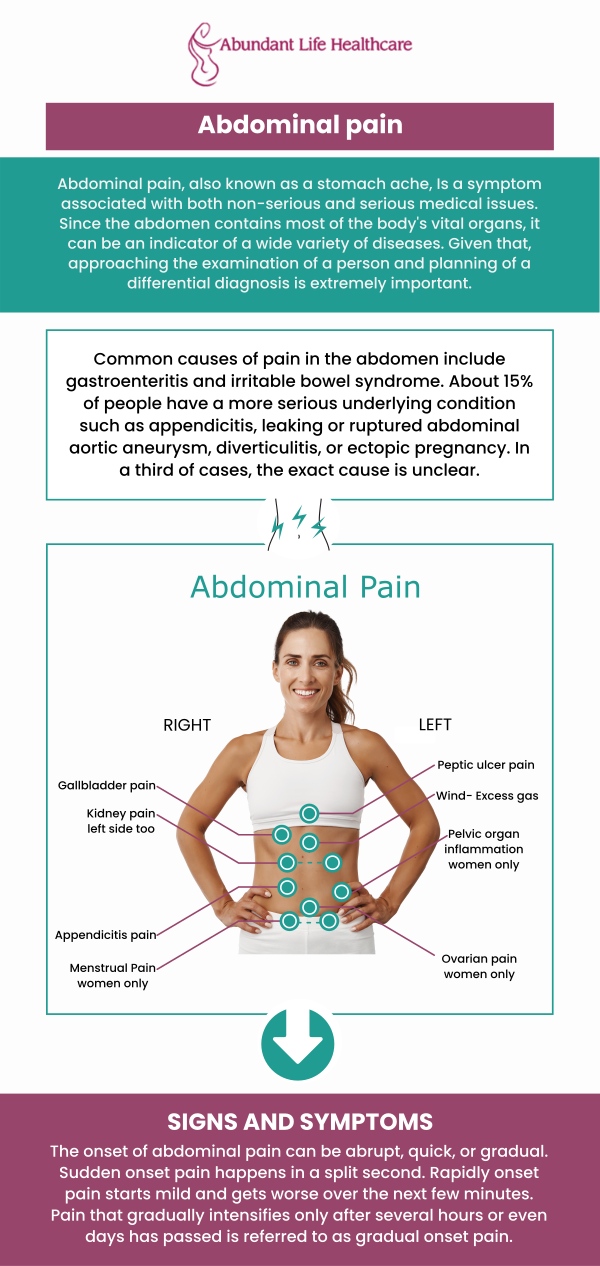
Table of Contents:
How can lower abdominal pain in females be a sign of menstrual health issues?
What role does the menstrual cycle play in causing lower abdominal pain in females?
Is lower abdominal pain during menstruation a common symptom of menstrual health problems?
How can menstrual cramps lead to lower abdominal pain in females?
How can Dr. Marc Jean-Gilles, DO, FACOG, diagnose the cause of lower abdominal pain related to menstrual health?
Lower abdominal pain is a common concern for many women and can be closely connected to menstrual health. The hormonal changes that occur during the menstrual cycle can affect the uterus and surrounding pelvic organs, sometimes leading to discomfort or pain. If you are experiencing lower abdominal pain—especially if it coincides with your period—it may be related to conditions such as dysmenorrhea (painful periods), endometriosis, or uterine fibroids.
Common Causes of Menstrual-Related Abdominal Pain:
• Dysmenorrhea: Painful periods are often the result of natural uterine contractions as your body sheds its lining. While some discomfort is normal, severe or disruptive pain should not be ignored.
• Endometriosis: This condition occurs when tissue similar to the uterine lining grows outside the uterus, causing inflammation and pain that often worsens during menstruation.
• Uterine Fibroids: Noncancerous growths in the uterus can lead to persistent pain, heavy periods, and a sensation of pressure.
• Other Conditions: Issues like ovarian cysts or pelvic inflammatory disease may also present with similar symptoms and can be influenced by your menstrual cycle.
At Abundant Life Healthcare, our experienced team takes the time to listen to your concerns and thoroughly assess symptoms such as the timing, severity, and nature of your pain. We also consider other factors like heavy bleeding, irregular cycles, or pain during intercourse, as these details help us understand the underlying cause.
Why Medical Evaluation Matters. If you are experiencing persistent or severe lower abdominal pain, we encourage you to schedule an appointment. Early evaluation and diagnosis are important in guiding effective treatment, preventing complications, and improving your quality of life.
Lower abdominal pain is a common concern for many women, often linked to the menstrual cycle. This type of discomfort, medically known as dysmenorrhea, is primarily caused by the body’s natural hormonal fluctuations—especially changes in estrogen and progesterone levels. As the uterus prepares for a potential pregnancy each month, these hormones rise and fall, and when pregnancy does not occur, their levels decrease. This triggers the shedding of the uterine lining, resulting in menstrual bleeding.
During this process, your body releases prostaglandins—natural chemicals that signal the uterine muscles to contract and help expel the lining. Sometimes, higher levels of prostaglandins can cause stronger uterine contractions, leading to cramping and significantly lower abdominal pain that often begins just before or at the start of menstruation and can persist for several days.
In addition, the menstrual cycle can affect other gynecological conditions, such as endometriosis, ovarian cysts, or pelvic inflammatory disease. These conditions may become more noticeable or symptomatic during certain phases of the cycle, as hormonal changes impact pelvic tissues.
Lower abdominal pain during menstruation—often called menstrual cramps or dysmenorrhea—is a common experience for many women and individuals with periods. This discomfort is usually caused by the uterus contracting to shed its lining, resulting in mild to moderate pain that is a normal part of the menstrual cycle for most people.
However, we also recognize that severe or persistent pain, especially when accompanied by symptoms such as heavy bleeding, fever, or pain. At Abundant Life Healthcare, our compassionate providers are here to help. If you are experiencing intense or unusual menstrual pain, we encourage you to schedule an appointment. Our team will work with you to identify the cause of your symptoms and create a personalized care plan to support your reproductive health and overall well-being.
Menstrual cramps—medically known as dysmenorrhea—are a common concern for many of our female patients. Lower abdominal pain during your menstrual period is often caused by the natural contractions of the uterus as it sheds its lining. When levels of prostaglandins are higher, the resulting contractions can become more intense, leading to more severe discomfort.
As the uterus contracts, it can press against nearby blood vessels, briefly reducing oxygen supply to the uterine muscles. This lack of oxygen contributes to the throbbing or cramping pain that many women experience, usually in the lower abdomen, and sometimes radiating to the lower back or thighs.
While mild to moderate cramps are considered a normal part of the menstrual cycle, severe or persistent pain may be a sign of an underlying condition such as endometriosis or uterine fibroids. Our compassionate team is here to support you. We offer individualized care to help you manage menstrual discomfort and evaluate any symptoms that may indicate a more serious underlying issue.
At Abundant Life Healthcare, Dr. Marc Jean-Gilles, DO, FACOG, is committed to helping women find answers and relief for lower abdominal pain related to their menstrual health. During your visit, Dr. Jean-Gilles will begin by taking a comprehensive medical history, asking you about the onset, duration, and intensity of your pain, as well as any associated symptoms such as unusual bleeding, nausea, or changes in your bowel habits. He will also review your menstrual cycle, sexual health, and any past gynecological concerns or surgeries to get a complete picture of your health.
A careful pelvic examination will follow, allowing Dr. Jean-Gilles to check for tenderness, masses, or signs of infection. If needed, he may recommend further diagnostic tests, such as a pelvic ultrasound, to look closely at your uterus, ovaries, and other pelvic organs for conditions like fibroids, ovarian cysts, or endometriosis. Blood tests may also be ordered to screen for hormonal imbalances, infections, or anemia that could be contributing to your symptoms.
If the initial evaluation does not reveal a clear cause, Dr. Jean-Gilles and the Abundant Life Healthcare team may suggest additional testing, such as advanced imaging or minimally invasive procedures like laparoscopy, to provide a more detailed assessment of your pelvic health. Throughout this process, our team will also consider non-gynecological sources of pain to ensure you receive a thorough and accurate diagnosis.
At Abundant Life Healthcare, we combine medical expertise, personalized attention, and advanced diagnostics to help you achieve optimal wellness and restore your quality of life. Dr. Jean-Gilles is dedicated to working with you every step of the way to identify and treat the underlying cause of your menstrual-related lower abdominal pain. For more information, contact us today or book an appointment online. We are conveniently located at 601A Professional Drive, Suite 370, Lawrenceville, GA 30046. We serve patients from Lawrenceville GA, Suwanee GA, Snellville GA, Duluth GA, Dacula GA, Lilburn GA, Loganville GA, Auburn GA, and surrounding areas.
Check Out Our 5 Star Reviews


Additional Services You May Like

Additional Services You May Like
- Obstetrics
- Pregnancy
- Gynecologist
- Birth Control
- Labiaplasty
- Microblading
- Weight Loss
- Semaglutide GLP-1
- Pap Smears
- Pelvic Pain
- Laser Hair Removal
- In House Ultrasound (Including 3D)
- Vaginal Birth After C-Section (VBAC)
- High Risk Pregnancy
- Multiple Gestations
- Postpartum Counseling
- 24hour/365days On Call Service
- Annual Exam
- Abnormal Uterine Bleeding
- Management Of Endometriosis
- Ultrasound
- Pelvic Organ Prolapse
- Urinary Incontinence
- Perimenopause And Menopause
- Sexual Dysfunction
- Cool Sculpting
- Body Contouring
- Ozempic
- Civil Surgeon
- Hormone Replacement Therapy
- Immigration Medicine
- Biote Hormone Pellets
- GLP-1
- Peptide Therapy
- Menopause
- Foundayo


 Send Text
 How May I Help You?